
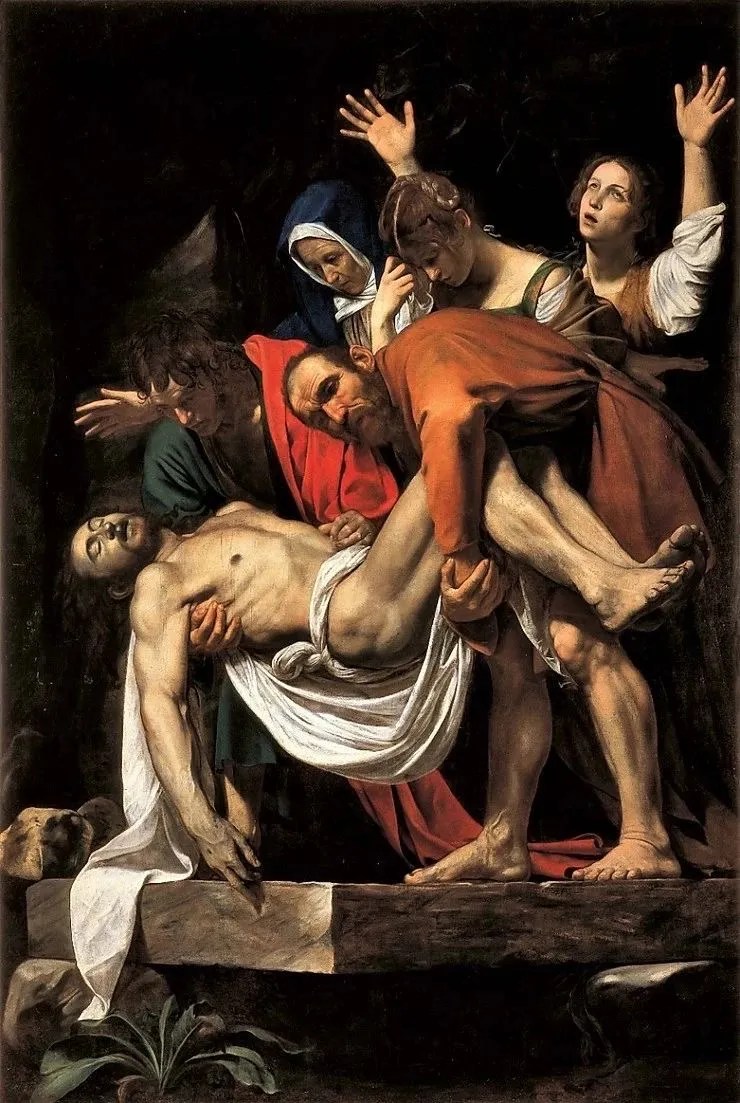
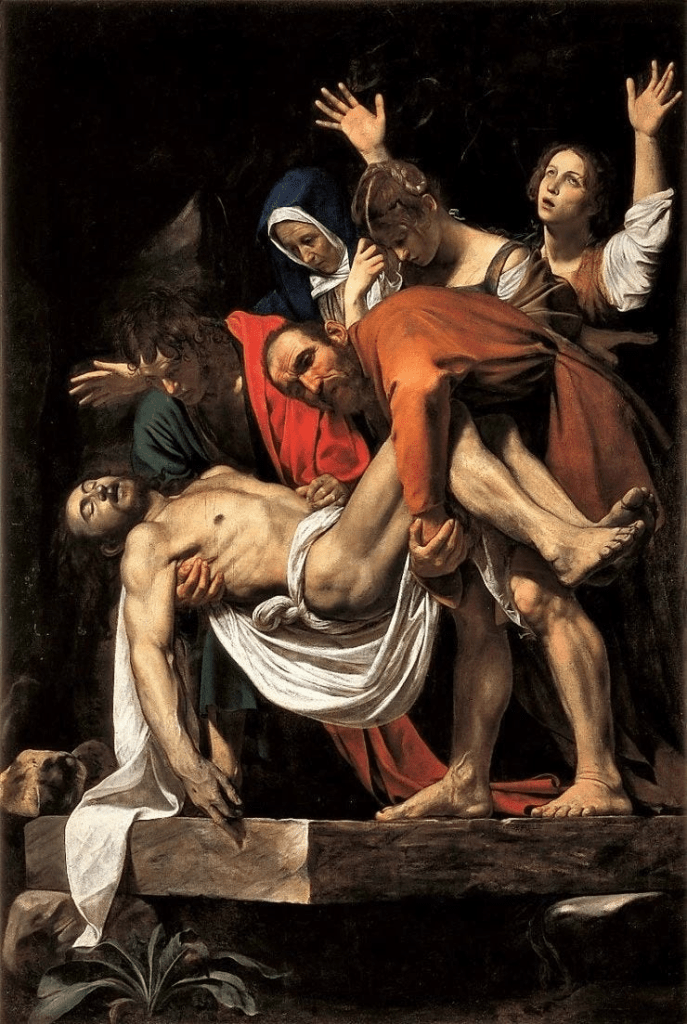
The story of Christ—a creator god who comes to earth, born in poverty to a child mother, into a human body with all its beauty and beastliness, to minister, to heal, to love those that had never been healed or loved, and then to die for us, to say “Put it on me, I’ll pay the price,” then to rise again—that story is the most exciting story in the world to me. It’s so compelling; a perfect man, with teachings about selflessness and equality and perfectly lived life, come to atone for the sins of mankind. A God who died—the one thing gods are not supposed to do! Christianity is so radical! God incarnate! To earth into a body with bones, with headaches, with intrusive thoughts, with a reproductive system, and with bowel movements. This was not some trip into personhood, some closely observed experiment, there were real stakes in his humanity. In my undergrad I had a class where we looked at anatomy textbooks from the 17th century (this is when they started doing better human dissection) and the question seemed to leap off every page: a body like this? Did Christ have a body like this? With its fluids and gases, its smells and sounds? The divine brought here, into this mess? This design? This fleshy machine? The poets, of course, were freaking out, and I loved reading about their anxiety and new appreciation for a half human God, come to save us from the very thing he had was. And what did he want us to do, this conquering hero? Be good to each other. To take care of each other. To love God. To follow him and turn away from sin.
He came down to a body and he came down to a people. There was a mechanism to his ministry and a context of his condescension. He was poor, he didn’t dress in white clothing, he didn’t have white skin, he wasn’t devastatingly handsome, he certainly didn’t look like a country music star (sorry Deseret Book!), and he wasn’t built like a linebacker (Sorry Red Robe Jesus!). He didn’t descend to hang out with the poor, that’s just where he was. He came into a world, just like we all do, that had a dense culture, society, language, biases, humor, and religion. He spoke to his people as he always had—in a way they would understand, not because he had a perfect grip on a foreign language, but because it was HIS language. He understood humanity because he was here; he saw sin and understood it. He saw folly and understood it. He saw ignorance and understood it. He saw us for what we are: abusive, cruel, filthy, guilty, hateful, hurtful, incestuous, jealous, lewd, masturbating, masticating, mean, nasty, selfish, self-righteous, unkind, violent, and xenophobic zealots, but for all the wrong causes. We have all tried our best to be kind and failed; we are forgetful, we are selfish, we have the best of intentions, and we fail and them. For him, there is nothing too low, nothing too sacred. Christ invites us over and over, to use him, so that we might be justified before God. He is not scared of our humanness—anger, hate, perverseness, prisons of habits or genetics. He understands—it is a part of him. He is not surprised at your sin or mine, there is no horror. Sin is a great teacher, and it is unavoidable. It is what you do after you sin and fail that matters, not the sin itself. Christ knew all these things because these were he things of his friends and siblings and parents and neighbors and leaders and cousins. This wasn’t humanity in the abstract—these were his people.
And he pulls it off. He does it. He is perfectly obedient to the Father; he lets himself be brutalized and murdered. He suffers for our sins. He dies and is resurrected. It is beyond my comprehension—this is his divinity. This is not human. Thank God!
But wait—why would God do this? Why did he have to murder his son? God is orchestrating this whole thing, right? Why crucifixion, isn’t that a little excessive? And where does obedience fit into this? And repentance? It’s all very nice, but Christianity wants me to do all this stuff—why? They talk about how free the gift is but then the communities are very judgmental about how people who get the gift are supposed to act, what is going on here?
First of all, God is governed by eternal laws—natural laws of which he has a perfect grasp. He didn’t come up with them, it’s just how the universe works. We know this instinctually; for example, he didn’t invent physics, but he understands it better than we do and therefore is able to do things we can’t explain. Laws like justice aren’t his invention, they are his tools. One of these laws is that to learn, a person must fail, be curious, receive correct instruction, experiment, put forth effort, have incentives, have passion etc. It is the only way to gain knowledge. There is no other way. God knew this and knew that the mistakes we made would matter so much more to our learning process than the successes. The plan had to include a way for us to learn, with all of its failures and procrastinations and good intentions, while still satisfying the other eternal laws of justice and mercy—that way was the atonement. It was not a backup. Learning is not a linear process, no one knows that more than God. God did not sit up in heaven, come up with rules, and then say, “I want them to be perfect, but they can’t, they will fail at this because they suck. I guess I will kill Jesus so that after they do their best (and they should do a lot), Christ can make up the like, 5% that they fail at.” I just don’t think that’s right. God loves us and wants us to be the best version of ourselves. God wanted a plan that was flexible and strong, one that allowed us to live our lives, to figure out what we wanted, to fail, to love, to hurt each other, to forgive—without damning us for way we had to get that knowledge. No one is more patient with his children, more curious about them, more delighted with them, than God. His perfect plan allows us to be free agents, able to do what good and ill we wish. And sin? Sin is “when you treat people as things. Including yourself.”[1]
Now, do I think that we should try to avoid sin? Of course. There is so much to learn about being a more Christlike person after you live an obedient life, constant sin is not required for the learning God has in store for us. Obedience should be the asphalt of our lives, not the destination. The destination is the goodness, kindness, patience, wisdom, selflessness, kindness and love of God. But really, God can use literally anything for your good. It’s one of the most incredible things about the atonement—because of that power, nothing has ever gone wrong. No sin has derailed you; no personal failure has put you on a path that is beyond Gods reach or even taken you from some predestined path. Nothing. Nothing has ever gone wrong. All of the experiences of your life can be made good through the atonement. They are yours! They shape the way that you see people and can love them! Everyone is learning and growing on their own path and God is aware of them perfectly and to all the promise is the same: if you come unto Christ, He can make all wrong things right. Even the worst moments, those that were the most unjust morally, emotionally, ethically and everything else—those can be made into something transformative and beautiful through the atonement of Jesus Christ. I have seen it done. I don’t think he is disappointed with his children or afraid when we fall short—what a shortsighted, human thing. I wonder if instead, when we sin, he thinks something like “Hm, interesting choice. Nothing I haven’t seen before (obviously), very work-through-able (obviously), I wonder what my child will do next. Or ever. What lessons will life teach them? What will they do? Who will they love? They want to sin? Looks like that is the way they are going to learn that lesson. If they learn it, it will be worth it. I can make it all perfect and good if they turn to me and to my perfect Son. His atonement makes it so He can take whatever sin and whatever past and make it so that my children become kinder, more compassionate, more loving, more patient and more like me. In fact, I can do that even if they are obedient—whatever path they choose actually, if they turn to me, I can make it so every choice they have ever made leads to making them more kind, compassionate, loving, patient and more like me”
THAT is the power of the Atonement. It is the assurance that it is all going to be ok. That God will take the choices I make and make them work for my good if I turn to him. It relieves the pressure. It offers respite. It allows the important questions of my life to shift: instead of asking, panicked, “What does God want me to do?” or “What do I have to do?” or “What am I supposed to do?” it shifts to “What do I want?” Do I want to be the best version of myself, the most kind, the warmest, the most loving, the most forgiving, the most connected, the most developed, the most whole? Then I should try to live the commandments—that is the program that God has promised me will make me the most like him. And I should live my life; I should try new things, and love people, and get really happy and really sad and figure out what I love, knowing and trusting that God and I can make everything good and holy. When I do good, I can know that I am exactly where I need to be, learning all the lessons I most need to learn, because this is where I am, and this is what I am learning. When I sin, I can know that I am exactly where I need to be, learning all the lessons I most need to learn, because this is where I am, and this is what I am learning. When I am struggling and life is hard, I can know that I am exactly where I need to be, learning all the lessons I most need to learn, because this is where I am, and this is what I am learning. When life is good and things are easy, I can know that I am exactly where I need to be, learning all the lessons I most need to learn, because this is where I am, and this is what I am learning. The Atonement makes us free. Thank God for Jesus Christ.
 Holly + Scotland
Leave a comment