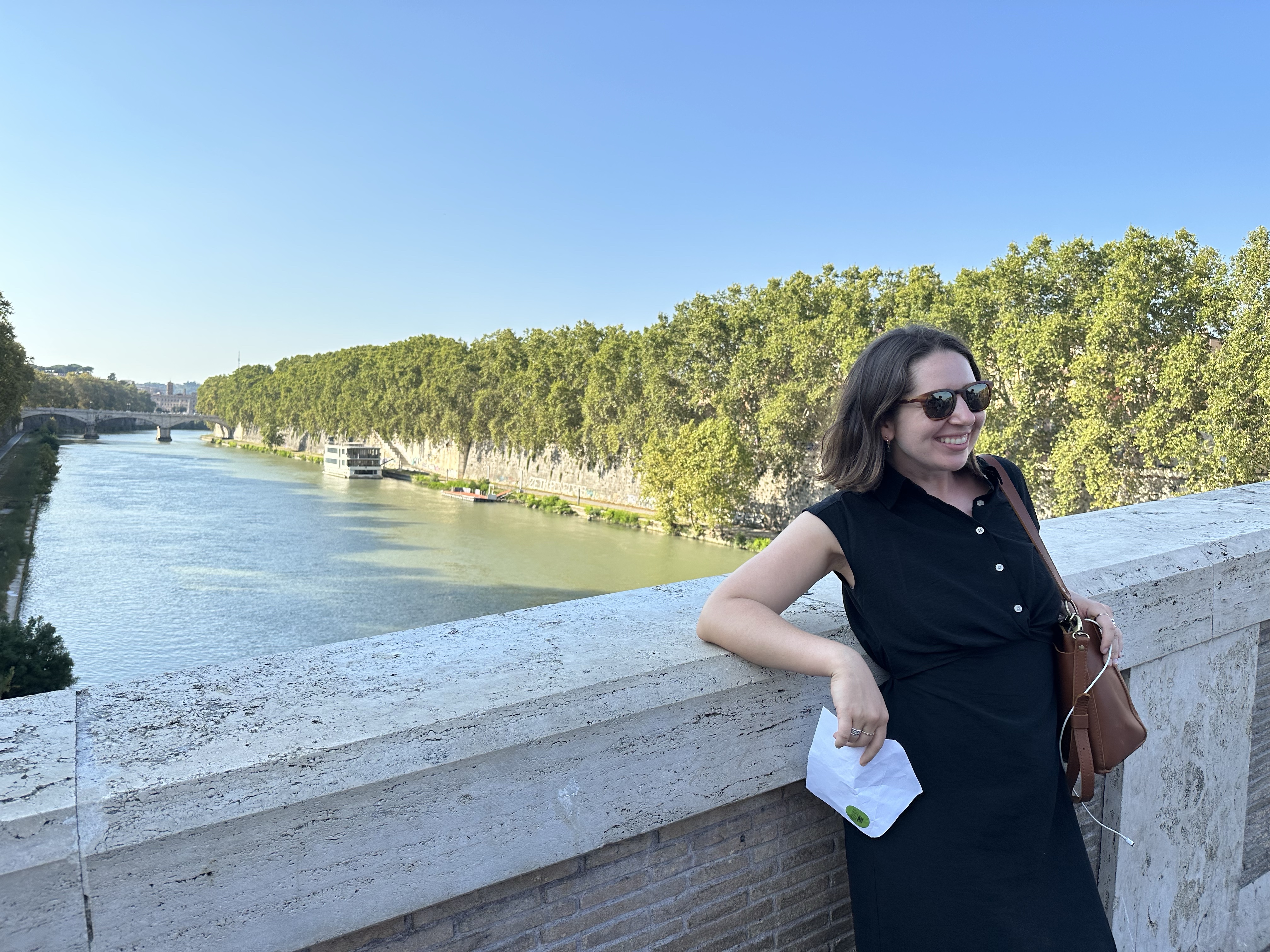
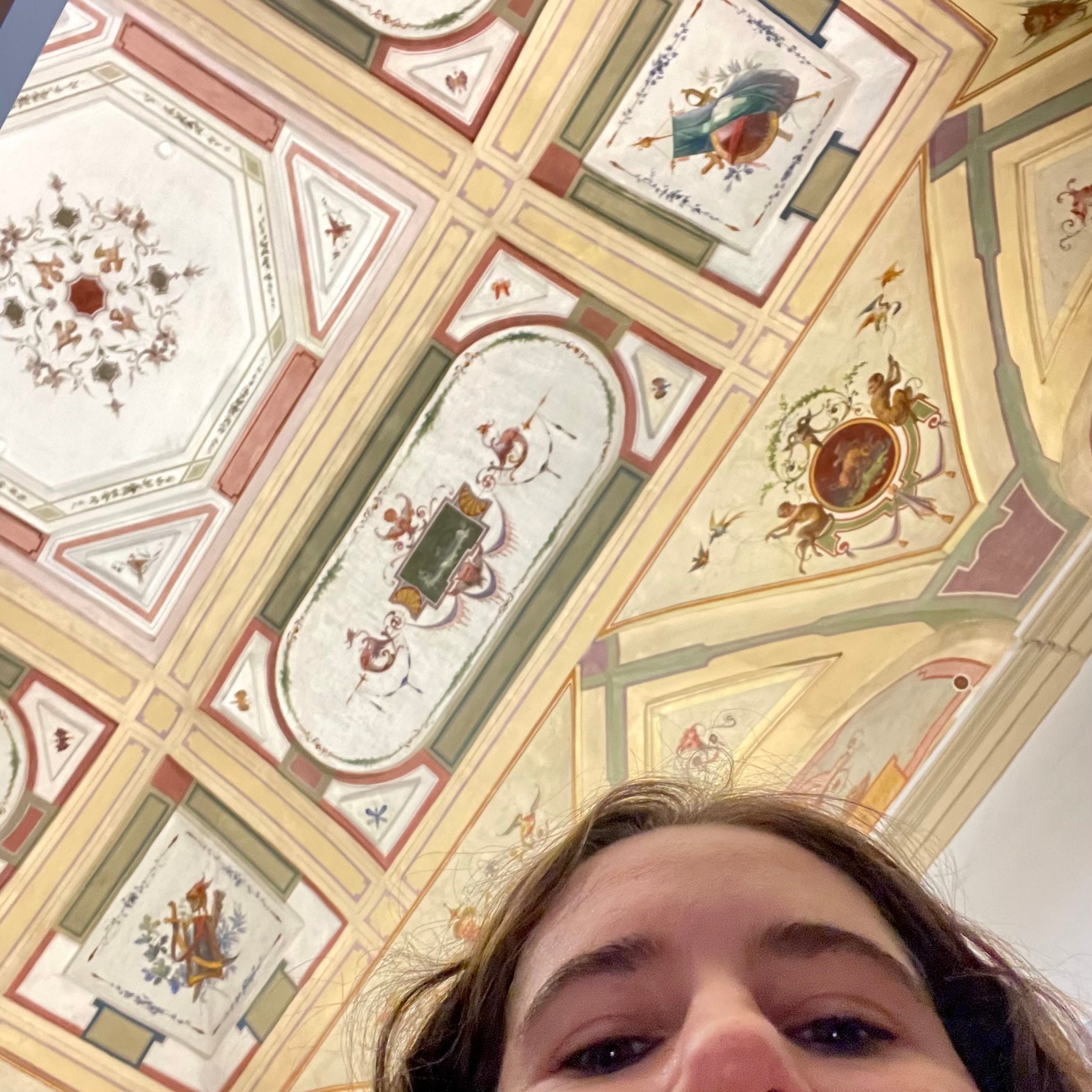
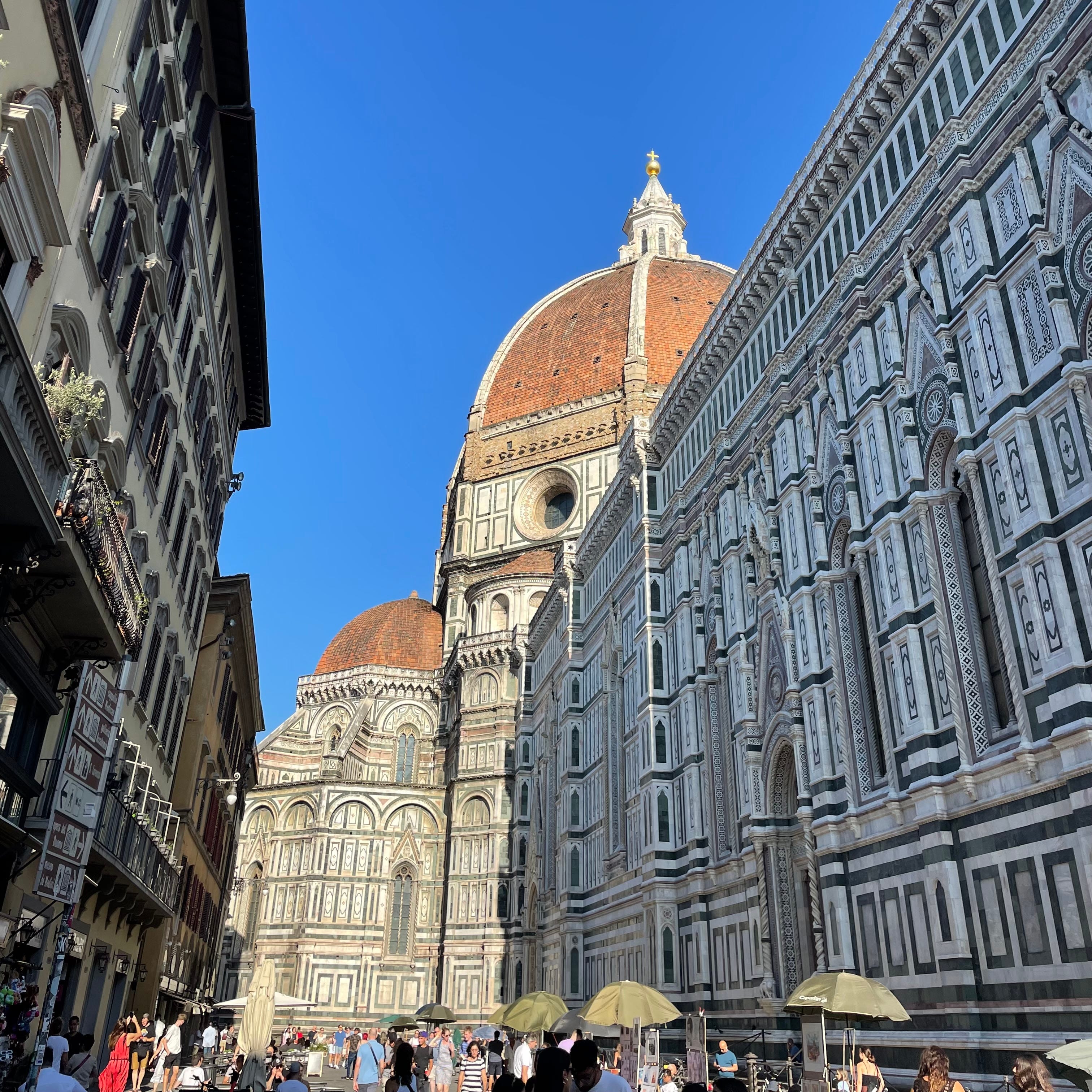
In the taxi from the airport to my Airbnb, the driver, after nearly killing some scooterers on a crowded street said, “These people, they think they are in Disneyland.” I spent four days in Florence and in a lot of ways she was right— the place was packed, most people dressed in costumes (i.e. sundresses and linen suits), if you didn’t have a reservation (i.e. fastpass) you had to wait in lines for hours in the sun, specialty treat opportunities were every 50 feet (i.e. gelato shops), and it felt like a play city with workers, not real people living their lives.
Tourists ruled the city. One of my favorite books is A Room with a View, about English tourists in the late 1800’s on holiday in Florence. Most of the author’s descriptions of Florence and it’s tourists could be applied to today more that a hundred years later— it is busy, full of people on tours, rushing from one place to the next, some people bound by an itinerary, other people feeling superior to their fellow travelers by doing things “off the beaten path,” and people complaining of the everything; the heat, the poor management of some inconvenience, the lines etc. I spent half the time enjoying Italy and the other half of the time enjoying watching the travel inclined world in my fellow tourists.
The main reason I wanted to go to Florence was to see my favorite painting, Cestello Annunciation by Botticelli. This is not a particularly famous painting— Botticelli painted two annunciation scenes and this is the less famous of the two. I fell in love with this painting in 2019. I was struggling with my faith and the paradoxes I felt existed within the core of Christianity. I felt horrible religious guilt, conflict as to whether I should feel guilty, and confusion about the role of sin and experience in life with the atonement. Why would God give laws that seemed opposed to each other? And why were the laws mediated by religion that continued to create and perpetrate paradoxes within the law? I felt so much fear and conflict and, being raised in a faith tradition that was not always comfortable with doubt or nuance in its members, very unstable. During this time I was in a class that focused on the body and one day we looked at this painting by Botticelli. In it, the angel Gabriel is kneeing with his hands raised in front of Mary and, according to the biblical story, is telling her that she will bare Gods child. There is clearly a lot of tension between the two figures, especially when compared to other annunciation paintings. My professor pointed out the conflict in Mary’s body— how twisted it was, her knees pointed away from the angel while her torso faced toward him, her hands reached for him but palms faced against him, she faced him but with eyes down. This was not a Mary who was demure and unemotional about what was being asked of her, this was a Mary in conflict. My professor said that she saw this as the embodiment of faith— not a blind faith, but one twisted up inside and still willing to say “Behold the Handmaiden of the lord.” This has a massive impact on me and felt like a balm to the conflict I had felt— I didn’t have to be perfectly comfortable in my faith, that wasn’t required. I could sit with my twisted up-ness and it could be enough. It brought so much peace, this permission to be in conflict, granted to me an image painted by a Catholic Italian man 500 years ago.
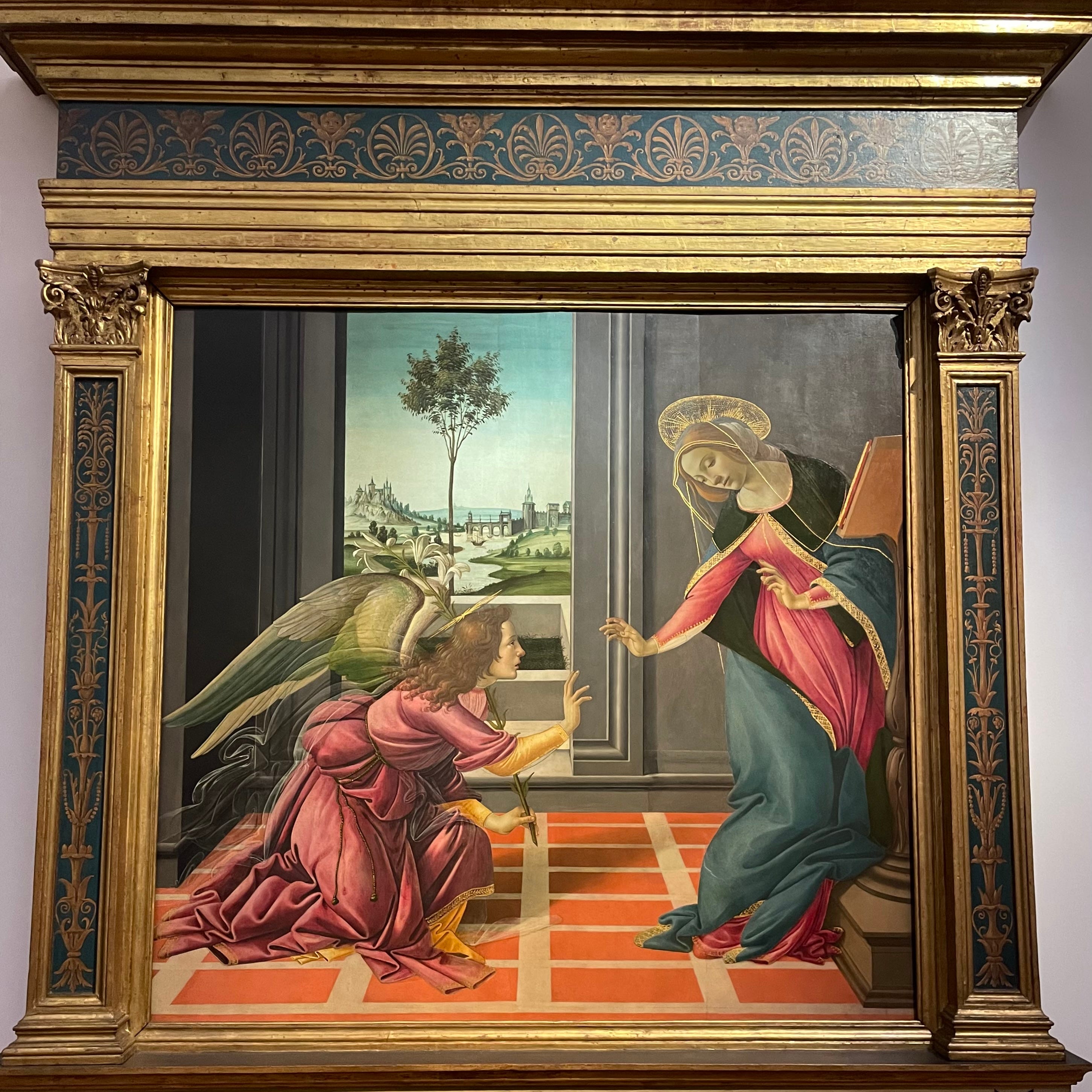
I have lived with and loved this painting for years— a dear friend gave me a print as a birthday present and it has been a staple of my house ever since. When I got to the Uffizi Museum and I took my time, making sure I didn’t miss any of my favorites from my art history classes (like Giotto and Filippo Lippi), as well as my usual art museum quests of finding the weirdest looking babies and cutest painted animals. I got to the Botticelli room and saw first Primavera with a massive crowd around it and, to my right, my annunciation. Looking at it was like I had been slapped in the face. I was shocked— how was there so much to see, so much I had missed? Colors that I had looked at hundreds of times suddenly popped and connected to other parts of the painting— had the wings always been tinged green? The same green as the scene out the window? Instead of the gold around Mary’s head being a painted gold, it was gold leaf so it moved and shifted as the light moved and was absolutely mesmerizing, making her face ethereal and radiant. The transparent veils were even more incredible in person, flowing around them in and giving both figures an unearthly sheen. Their faces looked alive; Gabriel’s was flushed and cautious, Mary’s was greenish/ gray, like she might be sick. Gabriel’s hands seemed like they were up in defense, like he was trying to say he wasn’t going to hurt her, like she might strike him. The hand postures seemed like a foil to Michelangelo’s Creation with God and Adam, their hands reaching for each other, God’s body arching toward Adam, Adam’s body facing squarely away. Here the hands were raised against each other yet the bodies were pulled together, arching to the center. I learned from tour groups going by that this was one of Botticelli’s later paintings and that he was depressed and disillusioned with politics and art. I chided myself for not knowing more about the artist. I loved this painting so much and yet I felt as if I had only scratched the surface of what I could learn from it. I was so emotional— there had been much anticipation for this moment, so much tenderness for this painting and its connection to my life as well as awe of its beauty.
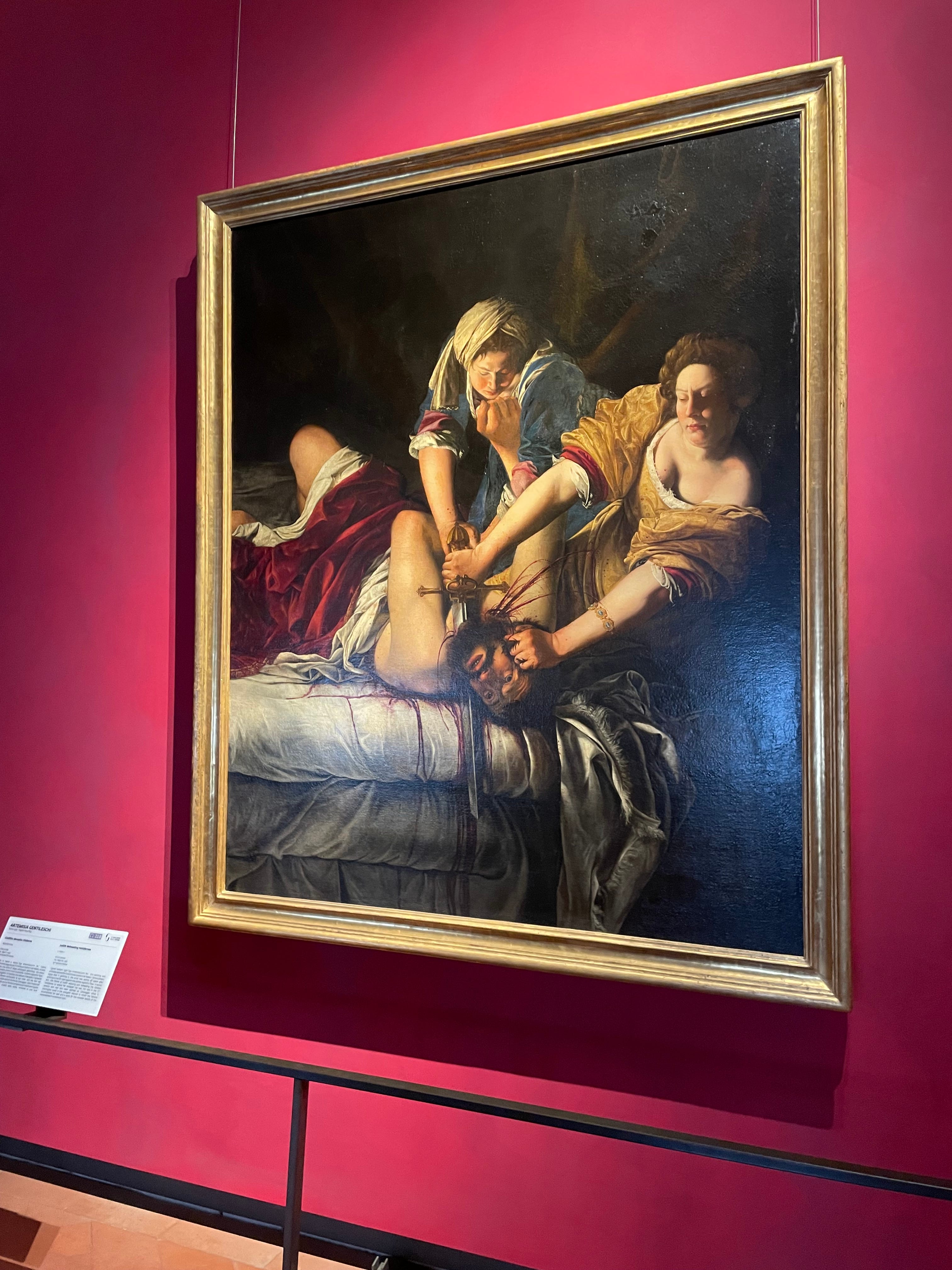
I finished the Botticelli and worked my way through the rest of the museum stopping at works by Da Vinci, Michelangelo, Caravaggio, the weird and wonderful mannerists, and Titian with the most beautiful and sexy Venus in the world— how did he get her face to look like that? Most of the interesting and beautiful things in Florence and because of the Medici family. I read a book about them before my trip, The House of Medici by Christopher Hibbert, and most of the museums and the art inside of them, the cities infrastructure that allowed it to be stable enough for art to flourish, and the most beautiful parts of the city, were all because of them and their banking prowess. For example, the Uffizi Museum was created when the last of the Medici family died (or were gay! Regardless, no babies). They donated their art collection to the city of Florence and the museum was born. The Boboli Gardens, beautiful curated gardens behind their government palace were also donated to the city. It was strange to think about this family and their wealth and the influence the art they sponsored and supported has had on the world.
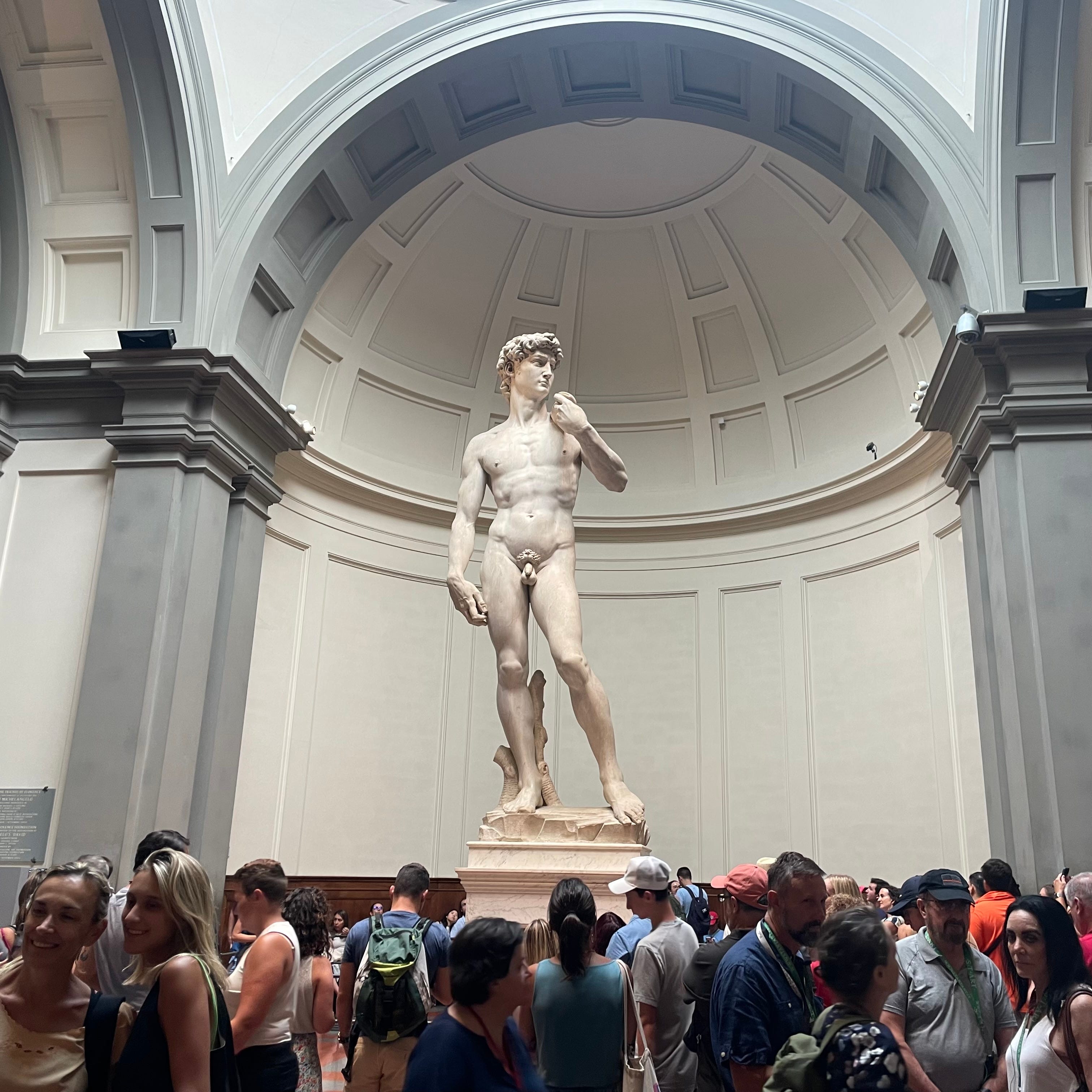
My last day I slept through the last bit of my jet lag which was great but I also slept through my reservation to get into the Galleria Acedemica which was not great. I didn’t have anything else planned for the day (except the usual, constant plans to eat pasta and gelato at every possible opportunity), so I went and planted myself in what ended up being a two hour line. The gallery was small and had more sculpture that the Uffizi. The David was striking and again, so different in person than in photos. I remember studying the David for the first time in a class— it was there that for the first time I realized that I found the male form beautiful. I had long reconciled myself to the fact I was sexually attracted to men, but I always found more aesthetic beauty in the female form. The David was the first time that I felt like I seriously considered the aesthetic value and beauty of the male form. Human bodies are so beautiful and I am glad that I had an education that allowed me to celebrate that beauty instead of having the naked body only be defined in terms of pornography or sin.
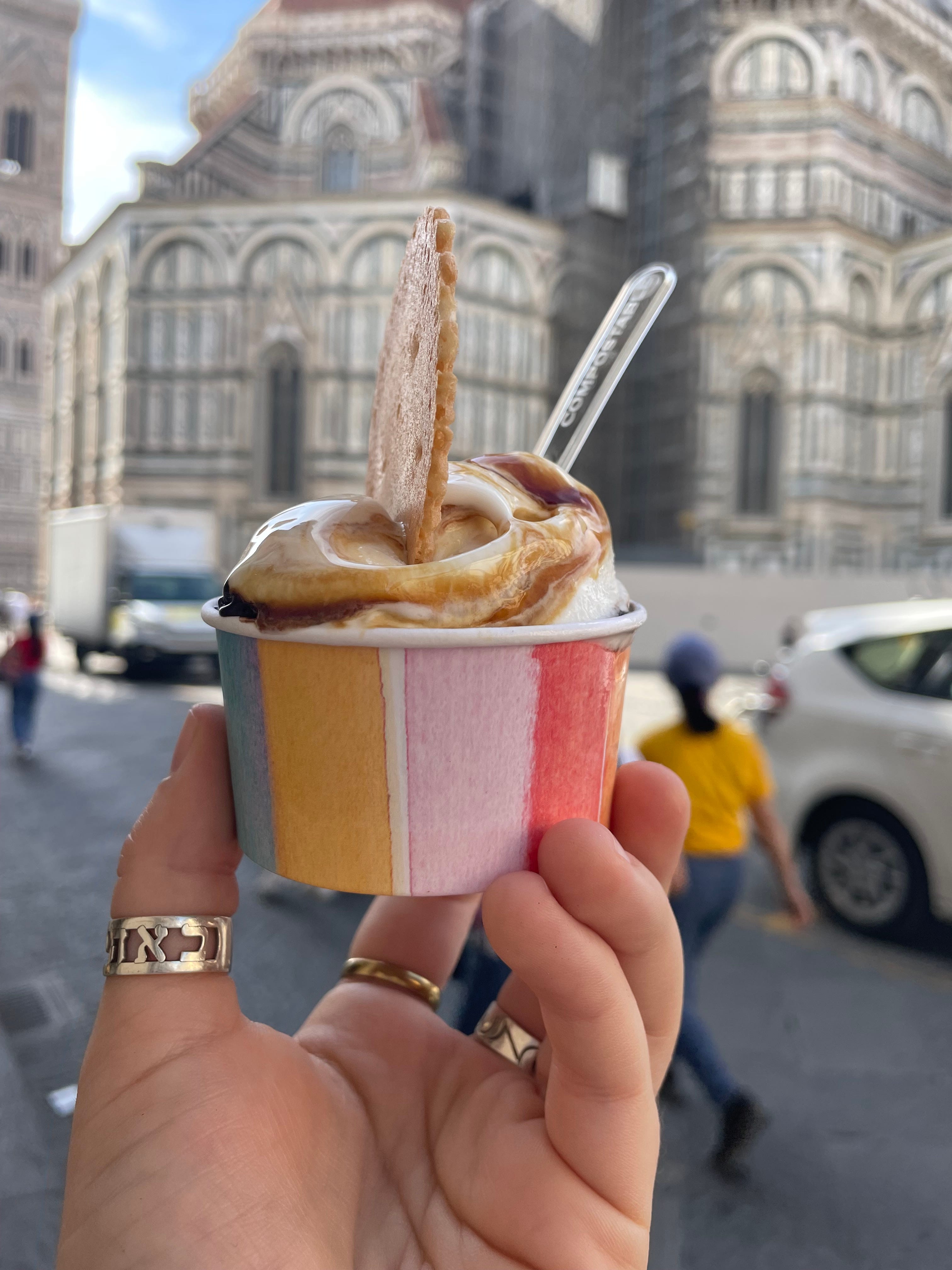
I ate an incredible amount of gelato in Italy and somehow not enough. Florence was a pleasure! It was incredible to stand in the presence of art that has shaped and enriched my life. It sometimes feels silly, to care about art. I recognize that we have a lot going on at the moment as a world community and art is often seen as superfluous. However I have never had the luxury of finding art an accessory to my life. I have cared about stories, beautifully told, my whole life and those stories have sustained me when I have been in pain. I care so much about beauty and it’s ability to elevate humans. There is something delightfully de-centering about art, about something beautiful that pulls you out of your own orbit and demands that you take it seriously by the pleasure you feel in its presence. I think there is something divine about that feeling and I am absolutely in awe of humanity for not only the pursuit of that type of beauty but their success in it.
I am traveling all around Europe! There will be lots of these “City Sketches” with things I loved and was thinking about when I was in that city.
 Holly + Scotland
Leave a comment