


Notes from the Tour
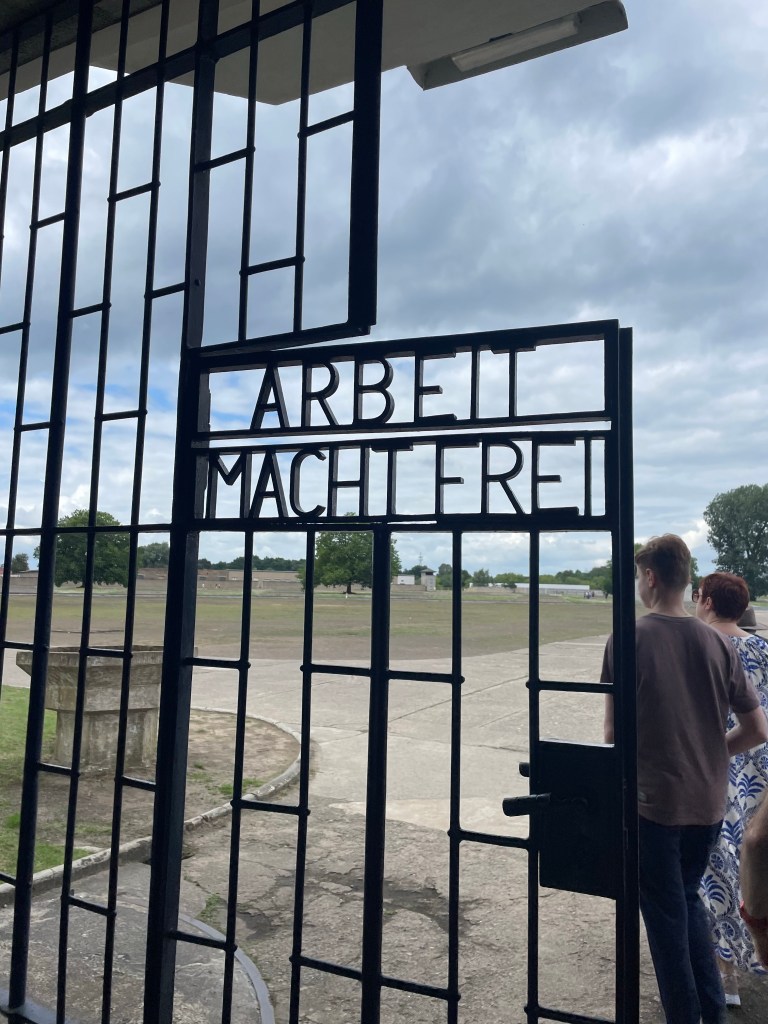
What was once Sachsenhausen Concentration Camp is about a 40 min train ride and a 15 min walk from Berlin. Sachsenhausen was a work camp and was the ‘model’ for many of the other camps. It was right next to the SS training facility and the bureaucratic hub for the entire concentration camp system– all the food orders, death orders, clothes orders, it all went through an office right next to Sachsenhausen. Concentration camps weren’t a German invention, they were a British one from South Africa. One of the high ups in Nazi party said something like “We didn’t create the concentration camps, we perfected them” which is chilling.
The camp started out as a place for political prisoners but by the time the war actually started, it was for all of the groups Hitler hated (Jews, homosexuals, gypsy’s etc.) and conditions were horrible. Mostly the prisoners were making bricks or being let out to other industries as slave labor. By the time the war started the population in the town around Sachsenhausen had doubled because of the bureaucratic center officers (“desk perpetrators”) and their families. Because this was such a big hub for SS officers, they had a huge impact on the tenor of the prison. Eager to prove themselves, they were incredibly cruel, going above and beyond to show how ruthless they could be, trying to stand out to their commanding officer. They would kill prisoners, humiliate them, and beat them at will. Most SS officers were young– the average age was 20. Within the camp, the prisoners were distinguished by signs on an arm band, different for Jews, gays, etc. Those that were German were sometimes an intermediary group that helped the SS and were treated a little better but were still prisoners. This allowed the SS to control everything without having to be with the sick and filthy prisoners all the time. These intermediaries had slightly better conditions than the average prisoner and had things like sex coupons for the few women in the camp who functioned as sex slaves. Danish and Norwegians were also treated better on account of their race. The camp was massively overpopulated– 3 men slept to a bed and the clothes and sheets were never washed. The smell was horrifying, often making the prisoners throw up or not eat. They had one meal a day and not enough toilets, men would sit 3 at a time on one toilet.
It was in Sachsenhausen that different types of mass murder were experimented with. First was putting people in trenches and gunning them down, however this was not as effective because the SS would watch it and see the people scream and beg and die and it was bloody and that made the SS less than interested in carrying out those orders. Instead of the trenches, the “neck shot” was developed where the prisoners would be led to what looked like a doctors office and then the doctor would put them up against the wall to “measure their height” and an officer would shoot them in the neck through a hole in the wall. This eliminated the problems of the trenches but it was less efficient because it was one at a time. Then the gas chambers were invented in other camps. This camp mostly stuck with neck shots though.
Solitary confinement prisoners were usually people that had information or were VIP’s. At first they would torture them by giving them lashes but sometimes the guards would get carried away and accidently kill them so instead they would hang the prisoners on a pole by their hands every morning during roll call so the entire camp would hear the sounds they made.
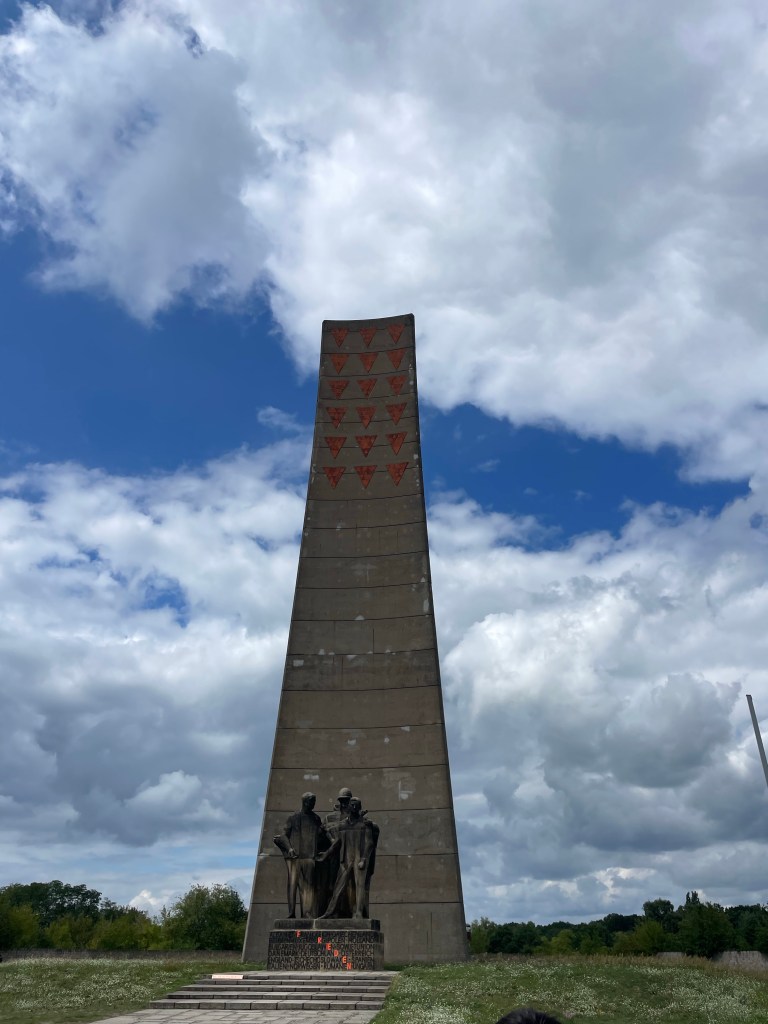
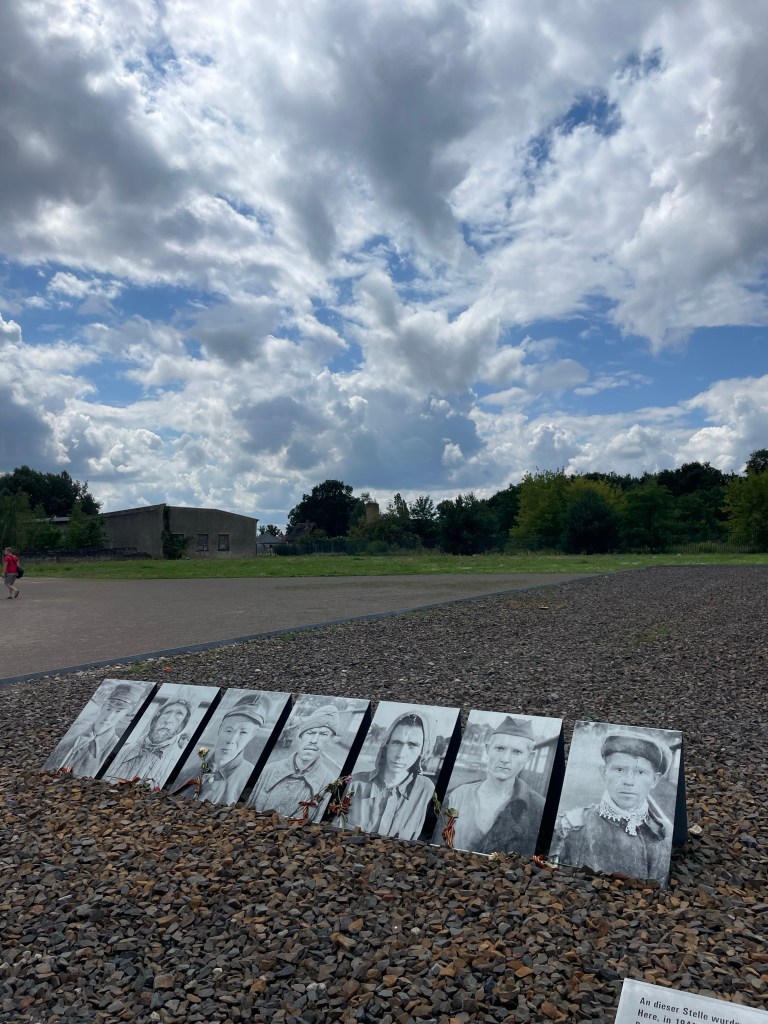
Once they killed 100,000 soviets there and buried their ashes. This concentration camp was liberated by the Soviets and repurposed for Soviet education about the Nazi’s and how much of a better system communism was. There was a giant statue of a tall Soviet solider helping two burley looking prisoners, standing over them like a big brother. During the Soviet period the camp was used to spread communist propaganda. After re-unification it was changed again to allow tourists and is now a memorial to those who died.
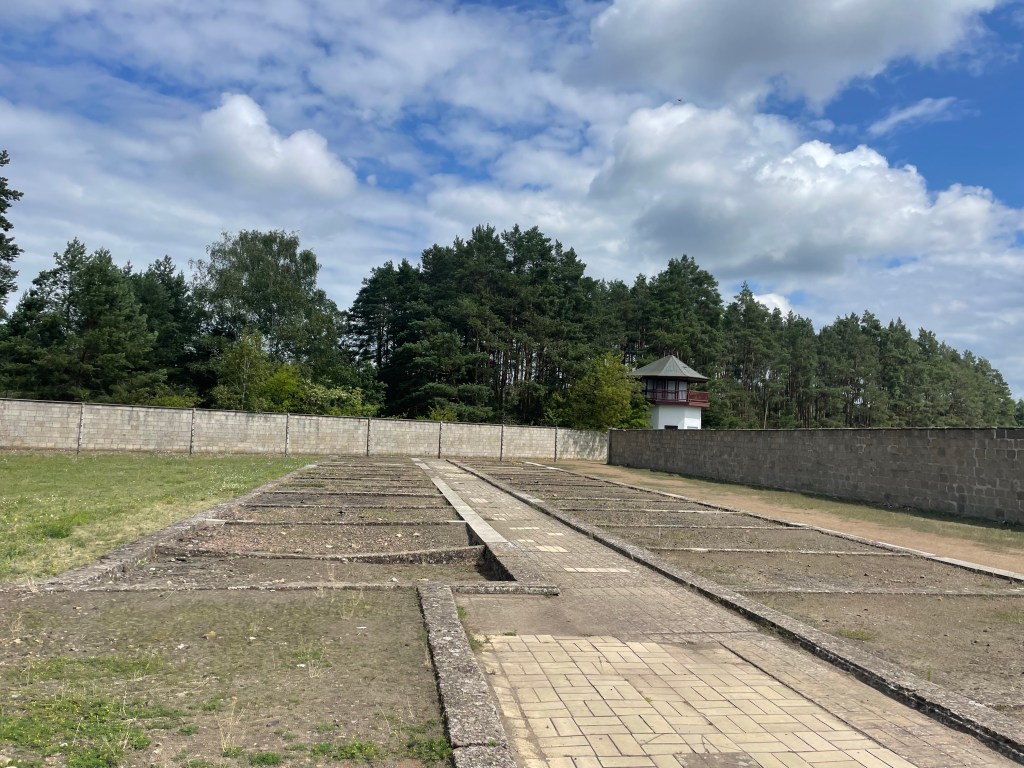
None of the original barracks are still there– they were made out of wood so there would probably not be that much left anyway but the wood was stolen by the townspeople after the war to help with reconstruction. 2 of the barracks have been rebuilt out of similar materials however, in honor of the Jewish prisoners. 30 years ago Neo-Nazi’s from the town attempted to burn them down.
The SS training facility is now a modern day police academy
Thoughts
My mind can’t even fathom all of the horror, which is of course, one of the problems. People get so uncomfortable they shut down. I have been to lots of Holocaust memorials at this point, the most impactful being the museum in Jerusalem which left me sobbing twice. I didn’t cry here, I felt numb and detached. This time I was just amazed and the cold efficiency at dehumanization and at breaking down the logistics of mass murder to be as itemized as possible so as to have those who participated do as little as possible. Mass murder but make it feel like a bureaucratic inevitable tasks.
There were wildflowers all over the camp– yellow, white, and purple ones. They were those little ones that you can’t even really see unless you were close. Outside the walls but still big enough to see were gigantic trees. I wanted to find beauty in these things but instead they horrified me and made me angry– they seemed so insufficient. This was all the earth could offer? This was all the grace it could give? I didn’t want them to be there, I wanted the earth to be salted over, infertile, infinitely barren. How dare flowers grow here. How dare the trees sway in the breeze. How dare the clouds roll overhead.
From Berlin Alexanderplaz
I have been fascinated by how much has been repurposed in Berlin. A building could be Republic, Nazi, Soviet, and then reunified German and still be used today. There seems to be something horrifying about knowing people still work in buildings that the Nazi’s built but at the same time it is also kind of beautiful. Maybe that’s not the word I am looking for– I think I just mean extremely human. We seem to adapt and change and yet stay the same. We build the house/ office building of the world and then we live in it. Sometimes we do good things and other times we don’t. All of the houses around the concentration camp were build by prisoners for the SS officers and their families. Now other families live there with big beautiful gardens and ivy growing on the calls. Sometimes I am so frustrated at the slow pace of the world’s change– other times I am astonished by how fast it moves. I think it is dangerous to feel that we are so different/ evolved/ could never. That we could act differently than those who were there or watched did. Of course if the same circumstances happened today, I am sure hero’s would be made by I sometimes if it would be necessarily be more than there were back then. I think that circumstance is so powerful, not the most powerful, but powerful nonetheless. I hope that I would have stood up and been willing to face the consequences but who knows– what if my family would be implicated or killed if I did? Maybe my own children? Would that change my action? Truly only God can judge.
The tour guide yesterday said “We are new at democracy and still figuring it out” and he is so real for that. American’s think they are pro’s but really we are also just figuring it out and are relatively new at it.
The public transit here is clean and, in my experience, reliable. Berlin seems like a nice place to live, like it would be easy to live there. I think the people are little too cold for my taste– I like that American’s are too nice and too warm, its the same thing I like about the Spanish and Latino Americans– but the city is nice.
 Holly + Scotland
Leave a comment